 NAmur Research Institute for LIfe Sciences
NARILIS seminar | Prof. Simon Galas, University of Montpellier, France
- https://www.narilis.be/events/narilis-seminar-simon-galas
- NARILIS seminar | Prof. Simon Galas, University of Montpellier, France
- 2026-08-20T16:00:00+02:00
- 2026-08-20T17:00:00+02:00
- When Aug 20, 2026 from 04:00 PM to 05:00 PM (Europe/Brussels / UTC200)
- Where UNamur, L12 auditorium
-
Add event to calendar
 iCal
iCal
We are pleased to invite you to a seminar given by
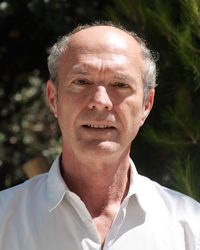
Prof. Simon Galas
University of Montpellier, IBMM, CNRS UMR 5247
https://ibmm.umontpellier.fr/annuaire/galas-simon/
His seminar is entitled:
A tiny worm, a little bear and Nobel Prizes:
How can we innovate using these model organisms in biomedical research?
Pioneering work that has utilized, at least in part, non-human models and which has been recognized with Nobel Prizes in Physiology or Medicine or Chemistry accounts for nearly 70 to 80 per cent of the total. The importance of these organisms as drivers of biomedical research and innovation is now well established, and the discovery in 1966 of the Taq polymerase enzyme hidden within an extremophile bacterium (Thermophilus aquaticus) from a hot spring in Yellowstone National Park is a prime example of this, alongside the invention of PCR (1993 Nobel Prize in Chemistry).
Some model organisms currently being studied in our laboratories are used for biomedical research because their functioning shares similarities with that of systems found in human cells. The nematode model for quantitative genetics, Caenorhabditis elegans, is one such model, and its use since the 1960s has already led to major scientific advances. Some of its characteristics, as well as a few interesting applications for biomedical research that stem from them, will be discussed.
Conversely, certain emerging model organisms that share few, or sometimes no similarities with human cells, are of particular interest for biomedical research. This is the case with the tardigrade, which will also be presented. Very recent molecular insights into this organism are already opening the door to innovative applications in the biomedical field.
Invited by Prof. Anne-Catherine Heuskin, UNamur, LARN