 NAmur Research Institute for LIfe Sciences
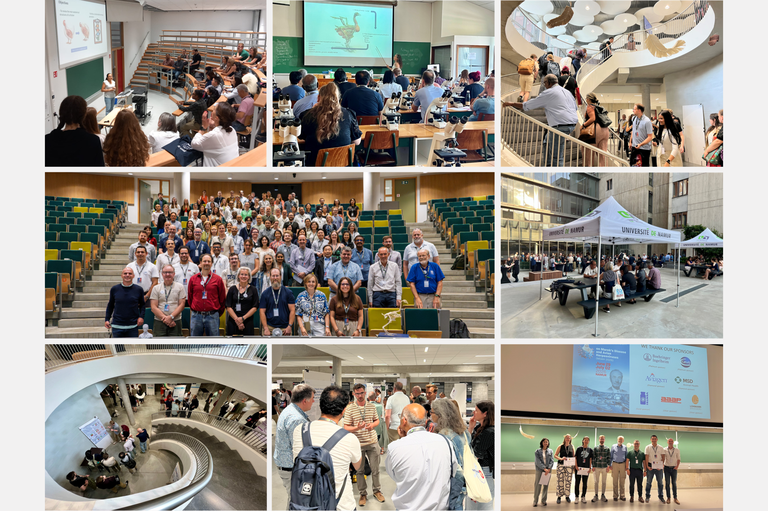
A successful 15th International Symposium on Marek’s Disease and Avian Herpesviruses in Namur
From June 29 to July 2, 2026, the UNamur hosted the 15th International Symposium on Marek's Disease and Avian Herpesviruses (MDAH). The event brought together 120 participants from 20 countries worldwide (Australia, Austria, Belgium, Canada, China, Ethiopia, France, Germany, Hungary, India, Italy, Japan, Slovenia, Taiwan, Thailand, The Netherlands, UK, USA, Spain and Vietnam) to exchange the latest scientific advances in poultry viral diseases.
Held every two years, this symposium is a major international forum for researchers working on Marek’s disease. The Marek’s disease virus (MDV) represents a major concern for poultry health and poultry industry, causing significant economic losses and necessitating around 22 billion vaccine doses each year to control the disease. At the same time, MDV is a model of choice for studying viral oncogenesis, helping researchers to better understand the mechanisms underlying virus-induced cancer.
The 15th edition was chaired by Benoît Muylkens, professor at the Department of Veterinary medicine at UNamur and group leader at NARILIS. His team is at the forefront of MDV research, with a particular focus on deciphering the role of viral circular RNAs during infection and tumor development.
A unique pre-symposium course on Avian Anatomy, Histology and Pathology
The meeting started with a pre-symposium course on Avian Anatomy, Histology and Pathology, which was attended by 65 participants. This training offered an in-depth introduction and hands-on practical sessions to explore avian anatomical structures, examine bird tissues and identify both normal and pathological features. The anatomy workshop was led by Laura Bonil, former PhD student in Benoît Muylkens’ lab, while the histology workshop was given by Caroline Canon.
A rich scientific programme and stimulating exchanges
The scientific programme featured 36 oral presentations selected from submitted abstracts, as well as three keynote lectures delivered by internationally recognized experts. Ton Schat, Professor Emeritus from Cornell University (USA) opened the symposium with a historical overview of five decades of research and discoveries on Marek’s disease. Benjamin Dewals from ULiège (Belgium) presented his work on the pathogenesis of malignant catarrhal fever, a peripheral T cell lymphoma that affects cattle. Sébastien Pfeffer from the University of Strasbourg (France) discussed the role of RNA regulation during viral infections.
The programme also included two lively poster sessions organized in a speed-dating format, creating opportunities for participants to exchange ideas and discuss their research.
Two roundtable discussions further strengthened the dialogue between fundamental research and practical challenges in the field. The first was titled “Field Feedback on Challenges Related to Marek’s Disease”, and the second “Building Bridges Between Scientific Research and Real-World Challenges.”
Celebrating the next generation of researchers
The symposium concluded with the presentation of the Boehringer Ingelheim Karel Schat Awards, recognizing outstanding scientific contributions from young researchers. The awards highlighted the quality of the research presented throughout the symposium and celebrated the achievements of the next generation of avian virologists.
Best oral communications awards:
- First place for Kallinikos Chalvatzis, University of Oxford and The Pirbright Institute, UK
- Second place for Yulin Cong, Freie Universität Berlin, Germany
- Third place for Camille Ponsard, UNamur, NARILIS, Belgium
Best poster awards:
- First place for Abdelhamid Fares, North Carolina State University, USA
- Second place for Rayanh Gutierrez, Pennsylvania State University, USA
A collective success
The organizing committee warmly thanks all sponsors for their financial support and active participation: Boehringer Ingelheim (Platinum), CEVA (Platinum), Aviagen (Diamond), MSD Animal Health (Diamond), Ventri biologicals (Gold), Lohmann Breeders (Silver) and AAAP (Silver).
The success of this symposium would not have been possible without the outstanding teamwork and impressive dedication of everyone involved here at UNamur. Special thanks go to Benoît Muylkens, Virginie van Scherpenzeel, Maïté Raffaelle, Laurence Anciaux, Laura Bonil, Emile Ligot, Vincent Ménard, Vincent Simon, Bastien Beaujeant, Béatrice Danneels, Caroline Canon and 11 veterinary students who facilitated the pre-symposium course.
NARILIS is proud to have contributed to this prestigious symposium in Namur. It was a great honor to play a part in fostering international collaborations, promoting the exchange of cutting-edge research and building bridges between science and real-world challenges in poultry health.