 NAmur Research Institute for LIfe Sciences
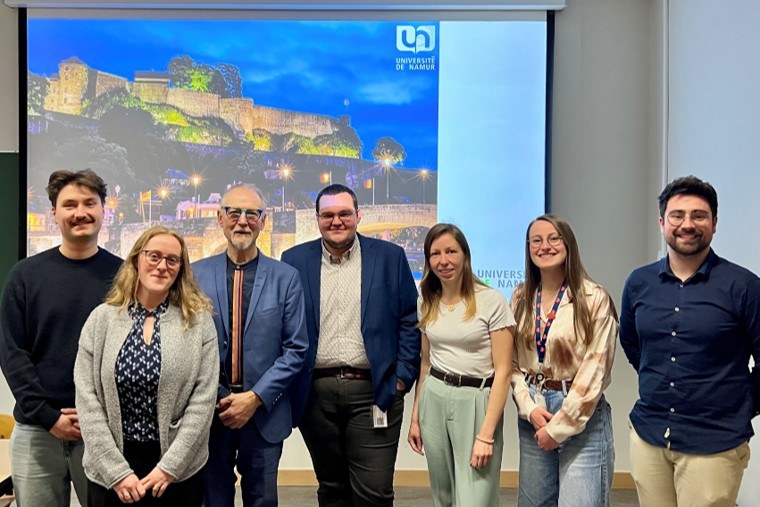
NARILIS welcomes Adrian Harris, a prominent figure in oncology research and Visiting Professor of the Princess Lilian Foundation
Each year, the Princess Lilian Foundation awards a visiting professorship with the aim of inspiring early-career researchers in Belgium. For the 2026 edition, this distinction was granted to Prof. Adrian Harris, whose nomination was put forward by Prof. Pierre Sonveaux from the UCLouvain.
In 1989, Adrian Harris was appointed as the first Professor of Medical Oncology at the University of Oxford, where he established the university’s first Department of Medical Oncology. He also led major research and clinical units at the Weatherall Institute of Molecular Medicine and the Churchill Hospital and established an early-phase clinical trials center. Adrian Harris is internationally recognized for his pioneering work in cancer research, particularly in tumour hypoxia and angiogenesis. His research has greatly advanced our understanding of cancer biology and paved the way for new therapeutic approaches.
After visiting UCLouvain, ULB and ULiège, Adrian Harris concluded his week at UNamur on Friday April 3, 2026.
During the morning, he was introduced to several of the university’s cutting-edge research facilities. Dr. Jean-François Colomer presented the UNamur’s electron microscopy platform, including the new cryo-electron microscope, which enables imaging at nanometer and even atomic-scale resolution. Prof. Henri-François Renard and Dr. Louise Thinès showcased the advanced optical microscopy platform, used for fluorescence, real-time and super-resolution imaging of isolated cells, spheroids, organoids, complex tissues and small living organisms. Prof. Anne-Catherine Heuskin and Hugo Stimoli then welcomed him to the LARN laboratory which houses the 2-MeV tandem particle accelerator ALTAÏS used by NARILIS researchers to study how cells respond to radiation.
In the afternoon, Prof. Adrian Harris delivered a lecture entitled “Challenges moving from laboratory drug discovery to early phase clinical trial” to NARILIS researchers and UNamur master’s students in biomedical sciences. The programme continued with a masterclass featuring presentations by six NARILIS scientists working in cancer research:
- Manon Van Den Abbeel (UNamur, URBC): X-ray and proton irradiation-induced anti-tumor immunity and type I interferon response in syngeneic HNSCC mouse models
- Giacomo Lopopolo (UNamur, LARN): Understanding the role of mitochondrial functions and lipid metabolism in cancer cell response to irradiation
- Maxence Toussaint (UNamur, URPhyM): Inactive GlcNAc-1-phosphotransferase potentiates the aggressive properties of triple negative breast cancer cells
- Louise Gerard (UNamur, URPhyM): Metabolic determinants of response to arginine deprivation in pancreatic cancer
- Céline Maschietto (CHU UCL Namur, NMT): From Waste to Insight: Accelerated molecular characterization to optimize non-small cell lung cancer care
- Jonathan Decarpentrie (UNamur, URPC) : Toward a blood test for glioblastoma: a multivariate plasma biomarker model for a safe diagnostic and monitoring
During this masterclass, Adrian Harris provided valuable feedback and engaged in stimulating scientific discussions with the young researchers.
The UNamur and NARILIS warmly thank the Princess Lilian Foundation for this unique opportunity to meet and exchange with a leading expert in oncology research.
From left to rigth: Maxence Toussaint, Louise Gerard, Adrian Harris, Jonathan Decarpentrie, Céline Maschietto, Manon Van Den Abbeel and Giacomo Lopopolo